

Managing a commercial facility demands constant vigilance, systematic planning, and active oversight. Commercial real estate properties host daily foot traffic, heavy vehicles, seasonal weather shifts, and complex mechanical networks. When every component functions as intended, business operations proceed without interruption, tenants remain content, and risk exposure stays low. Conversely, neglecting minor building defects often causes sudden operational downtime, costly emergency repairs, and diminished asset valuation. Facility directors must balance routine tenant requests with high-level physical asset stewardship across every square foot of real estate.
A comprehensive property maintenance checklist provides facility managers and owners with a proactive operational blueprint. Rather than waiting for critical infrastructure to fail, structured maintenance schedules establish clear routines for inspecting, servicing, and preserving physical assets across the entire facility. From exterior grounds to internal wall finishes, systematic oversight mitigates financial exposure, maintains regulatory compliance, protects long-term real estate returns, and extends equipment lifespans.
This ultimate commercial property maintenance checklist breaks down essential maintenance duties across key building systems. By organizing tasks into logical operational domains, facility leaders can keep their properties safe, fully compliant, and visually appealing throughout the calendar year.
1. Exterior Grounds and Structural Concrete Care
The exterior perimeter of a commercial building forms the immediate impression for visitors, employees, and prospective tenants. Beyond aesthetic considerations, exterior grounds present significant safety and liability factors if neglected. Sidewalks, parking areas, loading docks, and retaining walls require regular physical inspections to prevent slip-and-fall hazards and long-term water infiltration.
Cracks in parking lots and exterior walkways frequently occur due to ground settling, thermal expansion, and repeated vehicle loads. Water enters these minor fissures, expands during freeze-thaw cycles, and degrades the subgrade beneath the surface. Scheduling a professional commercial concrete service allows property managers to address spalling concrete, deep surface cracks, uneven sidewalk slabs, and failing curb structures before trip hazards endanger visitors. Timely concrete repairs restore structural stability, enhance overall curb appeal, and protect surrounding drainage channels from long-term soil erosion.
Physical perimeter controls also demand regular mechanical verification. Automated access barriers and security gates must undergo scheduled inspections to confirm that mechanical tracks, motor drives, safety sensors, and access keypads operate without binding. Outdoor gate hardware endures continuous weather exposure, making lubrication, alignment adjustments, and electrical checks essential every quarter. Ensuring that exterior perimeter barriers operate smoothly protects the physical boundary of the facility while maintaining safe, reliable access for authorized commercial vehicles.
2. Winter Preparedness and Seasonal Exterior Safety
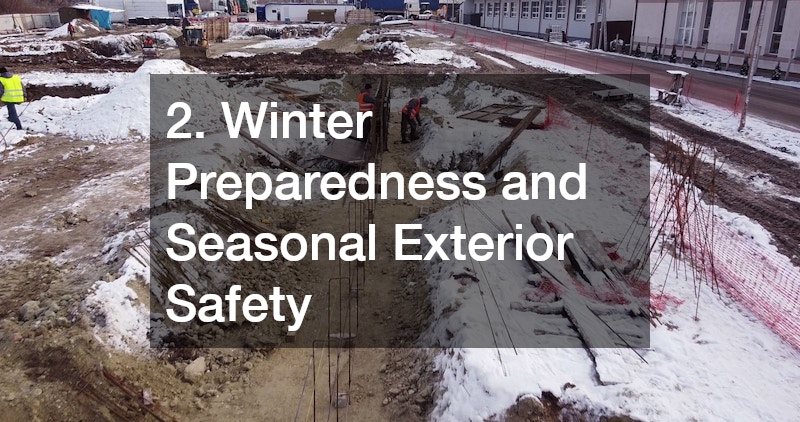
Facility management routines must adapt to changing seasonal weather conditions, especially in regions prone to freezing rain, heavy snowfall, and icy conditions. Cold temperatures create hazardous conditions for vehicles and pedestrians while placing immense stress on external building structures. Early winter preparation prevents unexpected business disruptions, protects outdoor infrastructure, and minimizes liability during major weather events.
Developing an effective winter response plan involves establishing detailed service agreements long before cold weather arrives. Partnering with a reliable provider for commercial snow plowing ensures that parking lots, access roads, emergency exit corridors, and loading docks remain clear during severe winter storms. Service contracts should clearly specify snow removal triggers, pre-treatment application guidelines, dedicated snow staging areas, and response timelines for high-priority operational zones.
In addition to snow removal, winter exterior checklists must prioritize chemical de-icing routines and freeze protection. Ice-melt products and abrasive sand must be selected carefully to balance ice control with long-term material preservation. Excessive salt application can damage concrete surfaces, erode asphalt, kill nearby landscaping plants, and corrode entrance door thresholds. Property managers should mandate regular site sweeps to clear slush, inspect catch basins for ice blockages, and confirm that fire hydrants remain completely unobstructed throughout winter operations.
3. Roof Preservation and Overhead Structural Protection
The roof assembly represents one of the most substantial financial investments in any commercial building. It serves as the primary defense against rain, hail, snow, solar radiation, and severe winds. Because roof damage often develops quietly above ceiling tiles, undetected leaks can rot structural decking, ruin internal drywall, promote mold growth, and damage expensive inventory or office equipment.
Establishing a bi-annual inspection routine in spring and autumn is crucial for maintaining commercial roofs. Scheduling a thorough commercial roof inspection allows certified technicians to walk the roof membrane, evaluate flashing around HVAC rooftop curbs and parapet walls, inspect expansion joints, and clear scuppers and internal drains. Inspections identify minor surface punctures, blistering seams, ponding water, and failing sealant coats long before moisture enters internal building spaces.
When surface wear or storm damage occurs, property owners must rely on qualified commercial roofers to execute permanent repairs. Routine maintenance includes clearing leaves from drain strainers, re-caulking penetration collars, securing loose metal flashing, and removing accumulated debris from roof gutters. Maintaining comprehensive service logs for every roof repair not only extends the overall service life of the roofing assembly but also preserves manufacturer warranty coverage during major insurance claims.
4. Plumbing Systems and Internal Infrastructure Upkeep
Commercial plumbing networks are significantly more complex than residential systems, featuring high-capacity water lines, commercial water heaters, extensive drainage networks, grease traps, and backflow preventers. A sudden plumbing failure can force immediate facility closures, damage expensive floor coverings, and cause health code violations. Proactive plumbing checks ensure that water delivery and waste disposal remain reliable and fully compliant.
Facility teams should perform monthly visual checks on all visible piping, shutoff valves, pressure-reducing valves, pipe insulation, and hot water storage tanks. Sudden pressure fluctuations often signal underlying issues within primary supply lines or regulator valves. Regular testing of backflow prevention assemblies is required by municipal health codes to prevent contaminated water from siphoning back into the public water supply. Additionally, commercial restrooms, breakroom sinks, and floor drains require frequent monitoring for slow drainage or minor leaks around fixture seals.
When internal piping system issues surface, engaging a licensed commercial plumber is necessary for specialized diagnostics and heavy-duty repairs. Professional plumbing contractors utilize hydro-jetting to clear stubborn sewer line build-ups, conduct video pipe inspections to pinpoint underground blockages, and service commercial water heaters to maintain proper sanitation temperatures. Regular maintenance of sump pumps and emergency lift stations should also be prioritized to handle unexpected heavy rains without flooding lower building levels.
5. Electrical Safety, Power Distribution, and Lighting Systems
Electrical systems power every operational aspect of a modern commercial facility, including interior lighting, climate controls, computer networks, and heavy manufacturing machinery. Electrical distribution systems operate under continuous electrical load, generating heat and experiencing gradual component degradation over time. Unmaintained electrical infrastructure poses severe risks, including unexpected operational downtime, equipment damage, and serious electrical fire hazards.
Preventative maintenance for electrical systems requires periodic thermal imaging inspections of main breaker panels, transformers, surge protectors, and switchgear assemblies. Infrared thermography reveals hidden hot spots caused by loose electrical connections, imbalanced loads, or failing circuit breakers long before a full system trip occurs. Maintenance schedules must also include functional checks of emergency backup generators, exit sign illumination, emergency battery backup lighting units, and outdoor security lighting fixtures across parking lots and building perimeters.
Complex electrical upgrades, panel servicing, surge suppression, and wiring repairs should always be assigned to certified commercial electricians. Professional electrical contractors perform load bank testing on emergency power systems, verify proper grounding networks, clean control panels, and ensure all electrical installations comply with local electrical codes and national safety standards. Upgrading outdated fluorescent fixtures to modern energy-efficient LED systems also reduces monthly power consumption while improving lighting quality across employee workspaces.
6. Access Points, Entryways, and Door System Operation
Building doors and access points undergo thousands of mechanical cycles every single month. Main entrance doors, emergency exit doors, overhead loading dock doors, and interior security partitions experience continuous physical wear. Functional door hardware is essential for maintaining climate control, securing building perimeters, protecting acoustic privacy, ensuring ADA accessibility, and providing safe egress paths during emergency building evacuations.
Routine maintenance checklists should direct staff to inspect door closers, hinges, automatic sensor thresholds, panic hardware, and weatherstripping. Misaligned door frames or worn hinges cause doors to drag against floor surfaces, placing excessive stress on latches and automated door operators. Damaged weather seals around exterior glass doors and loading docks let conditioned air escape, raising monthly heating and cooling utility costs significantly.
When access hardware fails or heavy entry doors lose alignment, prompt attention from a professional commercial door repair service ensures that perimeter security and accessibility compliance are restored immediately. Technicians can adjust hydraulic door closers, repair broken overhead dock springs, replace worn latching mechanisms, and service automatic sliding door systems. Maintaining proper latch tension and smooth mechanical operation on panic hardware ensures that emergency exits function without friction during critical evacuation events.
Additionally, property managers should periodically review secondary perimeter barrier equipment, such as perimeter security gates and vehicular access barriers, to confirm that safety sensors, auto-reverse mechanisms, and remote keypads operate without lag. Aligning primary entry doors with outer security barriers forms an integrated perimeter defense that protects tenant personnel and physical inventory around the clock.
7. Interior Finishes, Wall Preservation, and Surface Coatings
The interior physical condition of a commercial property directly influences occupant satisfaction and client perceptions. Scuffed walls, flaking paint, stained floor tiles, and worn interior surfaces project an impression of neglect, whereas clean, well-maintained surfaces suggest professionalism and high property standards. Maintaining interior surfaces requires a balance of routine custodial cleaning and periodic structural surface refinishing.
High-traffic areas like lobbies, hallways, stairwells, and breakrooms experience rapid cosmetic wear from cart movement, foot traffic, and equipment handling. Partnering with professional commercial painting services helps property managers keep interior walls, structural trim, and metal door frames looking fresh. Professional painters fix drywall damage, execute proper surface preparation, and apply durable, low-VOC commercial coatings that resist scuff marks, withstand frequent washing, and improve internal light reflectivity throughout workspace interiors.
Floor care goes far beyond nightly sweeping and damp mopping. High-use concrete floors in industrial spaces, retail showrooms, storage warehouses, and parking structures require specialized surface protection to resist oil stains, chemical spills, and heavy tire wear. Hiring specialists for local commercial floor coating services allows facilities to install heavy-duty epoxy, polyaspartic, or urethane coatings that lock out moisture, reduce concrete dust, and create slip-resistant working surfaces. These specialized floor finishes transform bare concrete surfaces into seamless, attractive, and chemical-resistant floors that last for years.
8. Developing a Master Maintenance Calendar and Vendor Strategy

Managing a commercial facility efficiently requires organizing maintenance tasks into clear daily, monthly, quarterly, and annual operational schedules. Daily tasks focus on basic custodial duties, trash removal, and visual walkthroughs. Monthly routines should involve testing life safety systems, inspecting fire extinguishers, checking HVAC filter conditions, and reviewing energy usage trends. Quarterly and annual schedules address deep system maintenance, capital budget planning, and major service contracts. Facility teams often utilize dedicated maintenance management software to track task completion and log upcoming work orders.
Maintaining detailed service logs for all trade work is vital for long-term facility management and asset value retention. Documenting every visit from a commercial plumber for pipe flushing or emergency drain clearance helps facility teams track recurring plumbing issues and plan future capital pipe replacements. Likewise, keeping comprehensive electrical records from licensed commercial electricians ensures that panel upgrades, transformer servicing, and code compliance work are fully documented for insurance audits and municipal building inspections.
Building strong relationships with qualified trade service providers guarantees faster response times during unexpected building emergencies. Having vetted service contractors on call eliminates panic when a pipe bursts, a roof leak develops during a heavy downpour, or a main entrance door fails to lock at the end of the business day. A well-managed vendor network combined with a disciplined preventative maintenance checklist protects property value, lowers operational costs, and provides an ideal environment for building occupants.
9. Integrated System Oversight and Operational Execution
Building systems do not operate in isolation; they function as an interconnected operational environment. A leak in an overhead roof membrane can cause electrical short circuits in ceiling conduits, while failing exterior drainage can flood perimeter concrete footings. Facility managers must take a holistic view of property care, ensuring that maintenance updates in one sector support the long-term performance of adjacent systems.
Creating emergency preparedness protocols is an essential extension of routine maintenance checklists. Property personnel should know the exact location of all main utility shutoffs, including gas valves, water mains, and main electrical distribution breakers. Testing these emergency shutoff mechanisms annually ensures they will operate smoothly during a crisis, allowing staff to isolate water leaks or electrical hazards rapidly before widespread structural damage occurs. Emergency contact rosters for key vendors and emergency municipal services should be verified and re-issued to building staff every twelve months.
A successful commercial property maintenance strategy is continuous, systematic, and proactive. Facility owners and building managers who embrace structured checklists transform maintenance from a reactive expense into a strategic operational investment. Regularly inspecting exterior foundations, structural roofing, plumbing lines, electrical distributions, access points, and interior surfaces preserves structural assets while preventing expensive emergency repairs. By building structured schedules and maintaining trusted vendor relationships across all primary trades, property leaders ensure that their physical assets remain safe, functional, and visually appealing for years to come.