

Most business owners buy insurance once, file the policy away, and never think about it again until something goes wrong. That gap between what you think you are covered for and what you actually have is where underinsurance quietly does its damage. A single unexpected incident, whether it is a flooded storage room or a vehicle collision involving a company driver, can expose just how thin your coverage really is. Understanding the real-world scenarios that catch businesses off guard is the best way to make sure your policy actually matches your risk.
Fleet Vehicle Collisions Reveal Coverage Gaps
Businesses that operate even a small fleet often assume their commercial auto policy covers every possible scenario, but a serious collision has a way of exposing the fine print. When a company vehicle is involved in a car accident, medical costs, vehicle replacement, and liability claims can stack up far faster than owners expect, especially if the policy limits were set years ago and never adjusted for inflation or fleet growth. Many business owners are shocked to learn that their policy caps out well below the actual cost of a multi-vehicle incident involving injuries.
This is also the point where legal exposure becomes real rather than theoretical. If an injured party decides to pursue compensation beyond what the insurance payout covers, the business can find itself negotiating directly with a personal injury attorney representing the other driver or a passenger. Reviewing your commercial auto limits annually, rather than letting them sit untouched, is one of the simplest ways to avoid this kind of surprise.
Warehouse and Storage Damage Exposes Undervalued Assets
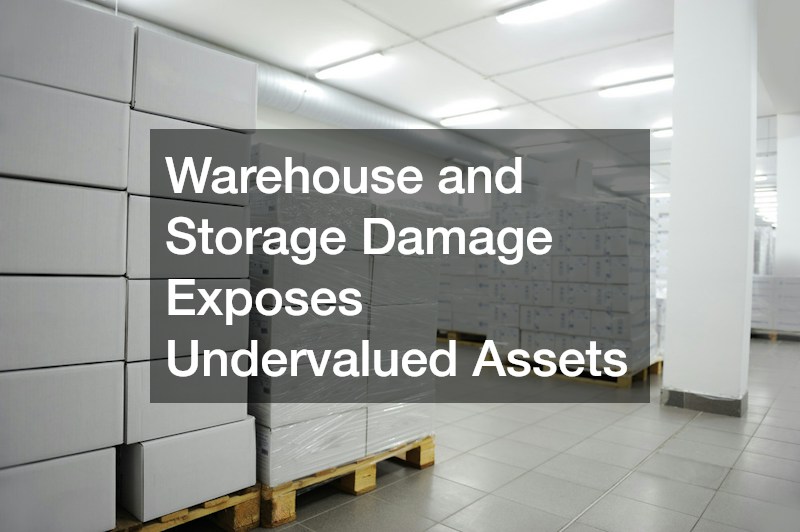
Fires, burst pipes, and storm damage in a warehouse often reveal that business owners have been insuring their inventory and equipment at outdated values. It is common for a policy to reflect what the business owned three or five years ago, not what sits on the shelves today. When a claim is filed, the payout is based on those older figures, leaving a real financial hole between what was lost and what gets reimbursed.
Regularly updating your valuation of inventory, equipment, and fixtures is not just good bookkeeping, it directly protects your bottom line after a loss. Many businesses only discover this gap after the damage is done, when it is too late to adjust the policy retroactively.
- Conduct an annual inventory valuation rather than relying on initial purchase estimates
- Separate high-value equipment into scheduled coverage when possible
- Keep updated photos and receipts offsite or in cloud storage
- Reassess coverage limits after any major purchase or expansion
Employee Injuries Highlight Weak Liability Limits
Workplace injuries are one of the fastest ways to discover that a general liability or workers compensation policy was never built for a worst-case scenario. A single serious injury, especially one involving long-term disability, surgery, or extensive rehabilitation, can quickly exceed modest policy limits that seemed perfectly reasonable on paper. A fall from a ladder or a back injury from repeated lifting can generate medical bills, lost wage payments, and settlement costs that climb well past $500,000 once ongoing care is factored in. Business owners are often surprised that the gap between the payout and actual costs becomes their direct financial responsibility. Workers comp policies typically cap payouts based on outdated payroll estimates or job classifications that no longer reflect the actual risk of the work being performed. If an employee’s role has shifted toward heavier physical duties without an update to the policy, the mismatch between coverage and real exposure often isn’t discovered until a claim is filed. Liability gaps also surface when a third party, like a contractor, vendor, or even a customer, gets pulled into the incident and files a separate claim. General liability limits of $1 million per occurrence can sound substantial until legal defense costs, expert witness fees, and a jury award are added to the medical expenses already on the table. Businesses in industries like construction, manufacturing, or food service, where injury risk is higher, are especially prone to being caught with limits that haven’t kept pace with growth in payroll or operations. The disconnect usually traces back to a policy that was set up years earlier and never reviewed as the business added employees, equipment, or riskier job functions. Without periodic audits of coverage against current headcount and operational risk, that gap stays invisible until an actual incident forces it into the open.
A single slip-and-fall or equipment-related injury can quickly exceed what most small businesses have budgeted for in their general liability policy. Medical bills, lost wages, and rehabilitation costs add up fast, and many standard policies cap out at $1 million per occurrence—a figure that sounds generous until a serious injury involves surgery, long-term care, or permanent disability. In situations where an injured employee or customer feels the settlement offered falls short, it is increasingly common for them to consult personal injury lawyers to evaluate whether further compensation is warranted. This does not necessarily mean the business did anything wrong, but it does mean inadequate coverage can turn a manageable incident into a prolonged legal and financial headache. Legal fees, court costs, and the time spent away from running the business often end up costing more than the original claim itself. Workers’ compensation coverage adds another layer worth scrutinizing. Many policies have limits or exclusions that don’t account for high-risk roles, repetitive strain injuries, or claims that develop over time, such as hearing loss or chronic back problems. Businesses that haven’t updated their policies to reflect current staffing levels or job duties may discover gaps only after a claim is filed. Reviewing liability limits against your industry’s typical claim sizes, rather than generic averages, gives a much more realistic picture of your true exposure. A construction company and a retail store face very different injury risks and settlement ranges, so benchmarking against sector-specific data—not a one-size-fits-all number—is the only way to know if your coverage actually matches your risk.
Office Relocation Incidents Show the Value of Transit Coverage
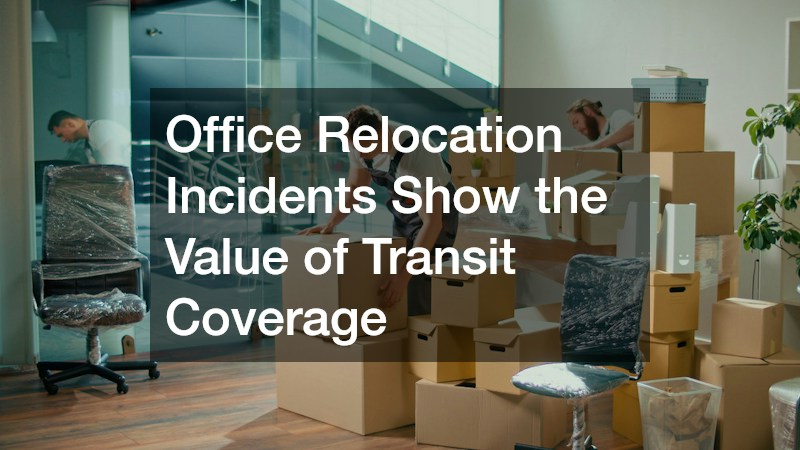
Moving a business from one location to another seems administrative until something breaks, goes missing, or gets damaged in transit. Many business owners assume their general property policy automatically extends to items in transit, only to discover during a claim that it does not. This is especially true for companies using a corporate moving service to handle office equipment, furniture, and sensitive electronics during a relocation.
Specialized transit insurance or a rider added to an existing policy can close this gap before it becomes a problem. Without it, a damaged server rack or a shattered glass partition during the move becomes an unplanned expense with no coverage to offset it. Confirming transit coverage before moving day, rather than assuming it is included, saves significant stress and cost.
- Ask moving vendors directly about their own liability coverage limits
- Confirm whether your property policy explicitly includes items in transit
- Photograph high-value equipment before and after the move
- Consider a short-term rider for the relocation period if gaps exist
Utility and Infrastructure Failures Expose Maintenance Blind Spots
Not every unexpected incident involves a dramatic accident. Sometimes it is a slow, unglamorous system failure that catches a business off guard financially. Commercial septic system pumping, for example, is one of those maintenance tasks that gets pushed down the priority list until a backup floods a restroom or shuts down a restaurant kitchen, and many owners are surprised to learn their policy treats this as a maintenance failure rather than a covered peril.
Insurance policies frequently exclude damage resulting from poor maintenance, which means a business that skipped routine servicing may be left paying out of pocket for both the repair and the resulting business interruption. Building a maintenance schedule into your risk management plan is just as important as the insurance policy itself, since prevention keeps you out of the gray area where claims get denied.
- Schedule routine servicing for septic, HVAC, and plumbing systems on a fixed calendar
- Keep maintenance records to support any future claim
- Ask your insurer directly what counts as a maintenance exclusion
- Budget for preventive upkeep as a cost-saving measure, not an optional expense
Business Interruption Losses Reveal Underestimated Downtime Costs
When an incident forces a business to close temporarily, whether due to fire, flood, or equipment failure, owners often discover that their business interruption coverage was calculated using unrealistic recovery timelines. A policy that assumes a two-week shutdown offers little help when the actual recovery takes two months because of supply chain delays or contractor backlogs. This mismatch between assumed and actual downtime is one of the most common sources of underinsurance.
Calculating a realistic recovery window, based on your specific industry and location, rather than a generic estimate, gives a far more accurate picture of what coverage you actually need. Business owners who revisit these numbers annually tend to avoid the painful surprise of discovering their safety net was far shorter than the actual crisis required.
Every one of these scenarios shares a common thread: the gap between assumed coverage and real-world cost only becomes visible after something goes wrong. Rather than waiting for an incident to expose where your policy falls short, take the time now to review your limits, valuations, and exclusions with a critical eye. A conversation with your insurance provider about these specific blind spots can be the difference between a manageable setback and a financial crisis. Treat your coverage as a living document that grows with your business, not a one-time purchase you can safely ignore.