
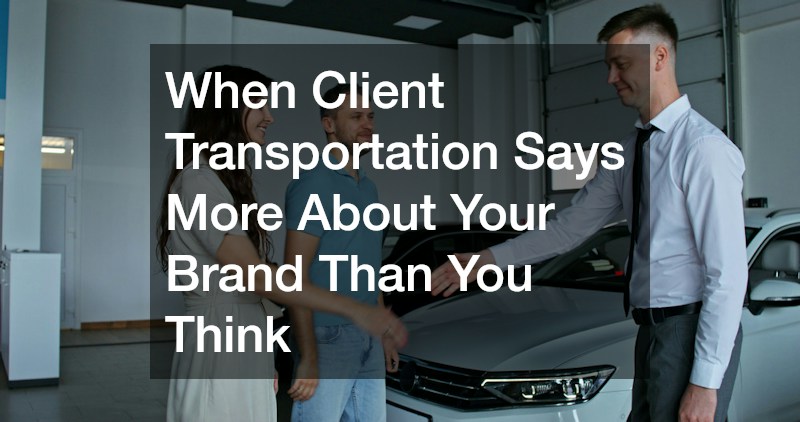
When you pick up an important client from the airport or send a car to bring a candidate to an interview, you are making a statement before anyone says a word. The vehicle, the driver, and the timing all communicate something about how much care your company puts into details. Most people underestimate how much a single ride can shape a first impression or quietly undo weeks of relationship building. If you are weighing your options for client transportation, understanding what each choice signals can help you make a decision that actually matches your brand.
The First Few Minutes of a Business Relationship
Psychologists have long noted that first impressions form within seconds, and that snap judgment colors how people interpret everything that follows. When a client steps off a plane or out of a meeting and finds disorganized or unprofessional transportation waiting, it can plant a small seed of doubt about your company’s reliability. On the other hand, a smooth, well-timed pickup suggests that if you handle the small things well, you probably handle the big things well too. This is why so many companies treat the ride from the airport as part of the meeting itself, not a separate logistical afterthought.
Consider how differently two scenarios play out for a visiting partner or investor. In one, they wait outside baggage claim, unsure who is picking them up, fielding texts about delays. In the other, a driver is holding a sign with their name, the car is already running, and they are seated and moving within minutes of walking outside. The second scenario costs more in planning but pays dividends in how the client perceives your company’s competence.
Matching the Vehicle to the Occasion
Not every business trip calls for the same type of vehicle, and choosing poorly in either direction can send the wrong message. An oversized luxury sedan for a casual coffee meeting can feel excessive and even uncomfortable for some clients, while a cramped economy car for a major contract signing can look like you are cutting corners. The goal is to match the vehicle to the tone of the relationship and the importance of the occasion.
Thinking through the context of each trip helps you avoid both extremes. A quick client lunch across town calls for something different than flying in a overseas partner for a week of negotiations. Being deliberate about these choices, rather than defaulting to whatever is convenient, shows clients that you have thought about their experience specifically.
- A standard sedan works well for routine client visits or single-passenger trips
- An SUV suits small groups or clients bringing extra luggage or equipment
- A larger vehicle makes sense when transporting an entire visiting team together
- Reserving something more upscale fits major milestones like signing ceremonies or executive visits
Punctuality as a Reflection of Company Culture
Few things undermine confidence in a company faster than a late pickup before an important meeting. If a client’s ride is late, it often triggers worry that other commitments, like project deadlines or contract terms, might also slip. Punctuality in transportation is one of the most visible and easily measured signals of whether a company follows through on its promises.
Building in buffer time and confirming schedules ahead of arrival reduces the risk of this kind of damage. Experienced coordinators track flight delays, traffic patterns, and meeting changes so the ride adjusts automatically rather than leaving the client stranded. This attentiveness, while invisible when everything goes right, becomes glaringly obvious the moment it fails.
The Driver Experience and What It Communicates

The driver is often the only person a visiting client interacts with before stepping into your office, which means their demeanor shapes the client’s mood walking in the door. A driver who is polite, discreet, and knowledgeable about the area gives the client a sense of being taken care of rather than simply transported. This is one of the main reasons companies choose a dedicated limo service over a rideshare app for high-stakes visits, since professional chauffeurs are trained specifically in client-facing etiquette. A rideshare driver may be perfectly capable, but they are not necessarily prepared to handle the quiet professionalism that a business guest expects.
Small details in how a driver handles the trip can matter more than clients might consciously notice. Helping with luggage, offering water, keeping the conversation appropriately light or silent depending on the client’s mood, and knowing the quickest route to the venue all add up to an experience that feels considered rather than generic. Over time, these small courtesies become part of how clients describe your company to others.
- A professional driver dresses and communicates in a way that matches a business setting
- Knowledge of local traffic and alternate routes prevents unnecessary delays
- Discretion matters when clients want to make calls or review documents during the ride
- Consistency across multiple visits builds familiarity and trust over time
Consistency Across Every Client Interaction
One polished pickup is memorable, but consistency across every client interaction is what actually builds a reputation. If transportation is excellent for a major client but an afterthought for a smaller account, word tends to get around, and it can make your company look like it only tries hard for the clients it considers important. Treating every visitor with the same level of care protects your brand from this kind of inconsistency.
Standardizing how transportation is arranged, rather than leaving it to whoever happens to be free that day, helps maintain this consistency. A simple checklist or a designated point person for coordinating pickups can prevent the kind of last-minute scrambling that leads to uneven experiences. The goal is for every client, regardless of deal size, to leave with the same impression of a company that pays attention to detail.
- Assign one person or team to own transportation logistics for all client visits
- Use the same vetted providers so quality remains predictable
- Confirm details the day before, not just the morning of
- Ask for client feedback occasionally to catch small issues before they become patterns
The way you move clients from point A to point B is rarely the main event, but it quietly shapes how they perceive everything that happens afterward. Treating transportation as a genuine extension of your brand, rather than a logistical chore, can strengthen relationships before a single word of business is discussed. Start by reviewing how your company currently handles client pickups and look honestly at whether it matches the impression you want to leave. Small adjustments here often produce an outsized return in how clients remember working with you.