Commercial agriculture is under increasing pressure to produce higher yields while using fewer resources. Climate variability, land limitations, and rising operational costs have all pushed growers to adopt more controlled and efficient production systems. One of the most effective solutions has been the development of advanced greenhouse infrastructure designed specifically for large-scale cultivation. These systems allow growers to regulate temperature, humidity, lighting, and irrigation with precision, creating optimal conditions for plant growth year-round. As demand for consistent and high-quality produce continues to grow, the role of specialized design and construction professionals has become increasingly important in shaping the future of agriculture.
Controlled Environments and Yield Optimization
One of the primary advantages of modern greenhouse systems is the ability to create a fully controlled growing environment. Unlike traditional open-field farming, where crops are subject to unpredictable weather conditions, greenhouse structures allow for precise regulation of environmental variables. This includes temperature control systems that maintain ideal growing conditions regardless of external climate fluctuations, as well as humidity regulation systems that reduce plant stress and disease risk.
Lighting is another critical factor in optimizing crop production. Advanced greenhouses often incorporate supplemental LED lighting systems that extend growing hours and ensure consistent light exposure. This is especially important in regions with limited sunlight during certain seasons. By controlling photoperiods, growers can influence plant growth cycles and increase overall productivity.
Irrigation systems within these controlled environments are also highly efficient. Drip irrigation and hydroponic systems reduce water waste while delivering nutrients directly to plant roots. This precision not only conserves resources but also improves crop quality and consistency. When combined, these technologies allow growers to achieve significantly higher yields per square foot compared to traditional farming methods.
Infrastructure Design and Technological Integration
The efficiency of a greenhouse operation is heavily influenced by its structural design and the integration of modern technology. Proper layout planning ensures optimal airflow, light distribution, and accessibility for maintenance and harvesting. Structural materials such as high-strength aluminum frames and specialized glazing systems contribute to durability while maximizing light transmission.
Automation plays a major role in enhancing operational efficiency. Climate control systems can automatically adjust ventilation, heating, and cooling based on real-time environmental data. Sensors placed throughout the facility continuously monitor conditions such as soil moisture, carbon dioxide levels, and temperature, allowing for immediate adjustments when needed.
In many cases, greenhouse systems are now integrated with centralized management software that provides growers with full visibility into operations. These platforms allow for remote monitoring and control, reducing the need for manual intervention and improving response times. Data collected from these systems can also be analyzed to identify trends and optimize future production cycles.
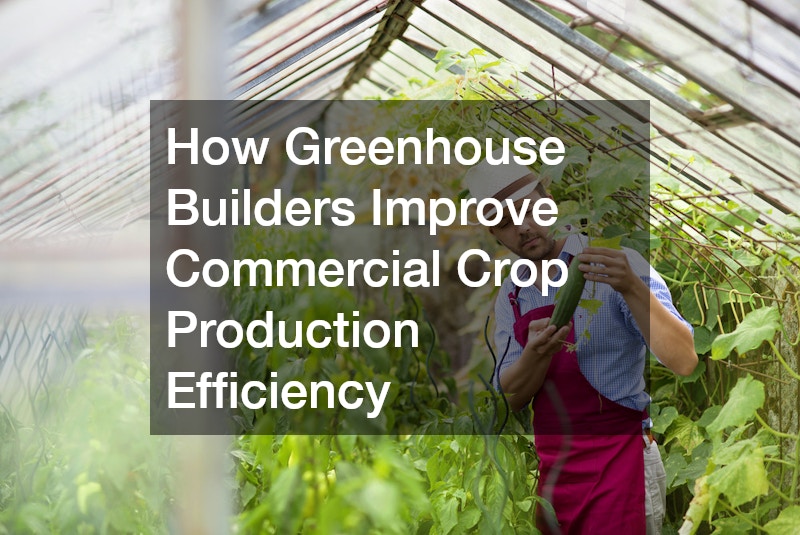
Professionals in this field, including greenhouse builders, play a key role in ensuring that all these systems are properly designed and integrated from the outset. Without careful planning, even the most advanced technology can underperform or become inefficient in real-world conditions.
Energy Efficiency and Resource Management
Energy efficiency is a major consideration in commercial greenhouse operations, as heating, cooling, and lighting systems can account for high operational costs. Modern greenhouse designs often incorporate energy-saving features such as thermal screens, insulated panels, and energy-efficient HVAC systems to reduce overall consumption.
Renewable energy integration is also becoming more common. Solar panels, geothermal systems, and energy storage solutions are being used to offset electricity usage and improve long-term sustainability. These systems not only reduce environmental impact but also help stabilize operating costs over time.
Water management is another critical component of resource efficiency. Closed-loop irrigation systems allow excess water to be collected, filtered, and reused, significantly reducing waste. In addition, nutrient delivery systems ensure that plants receive precise amounts of fertilizer, minimizing runoff and environmental impact.
By combining energy-efficient design with advanced resource management systems, modern greenhouse operations can significantly reduce their environmental footprint while maintaining high levels of productivity.
Scalability and Long-Term Production Planning
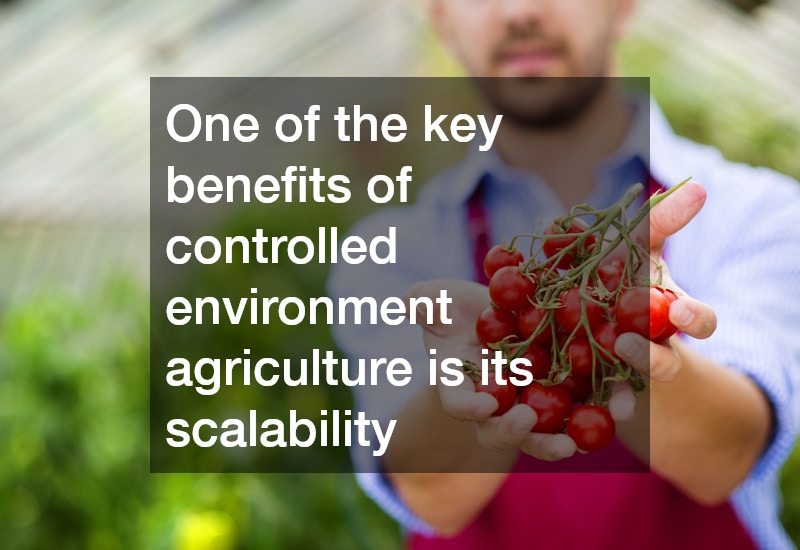
One of the key benefits of controlled environment agriculture is its scalability. Greenhouse facilities can be designed to expand gradually as production demand increases, allowing growers to invest incrementally rather than committing to large-scale infrastructure all at once. This flexibility is particularly valuable for commercial growers looking to manage risk while scaling operations.
Modular greenhouse designs are increasingly popular because they allow new sections to be added without disrupting existing production. This approach enables continuous growth while maintaining operational stability. Additionally, standardized systems ensure that new expansions integrate seamlessly with existing infrastructure.
Long-term production planning also benefits from the consistency that greenhouse environments provide. Because conditions are controlled, growers can predict yields more accurately and plan supply chains with greater confidence. This stability is essential for meeting contracts with distributors, retailers, and food service providers.
Specialized expertise provided by greenhouse builders ensures that scalability is built into the foundation of the system. Proper planning at the design stage reduces future limitations and allows for more efficient expansion over time.
Efficient commercial crop production depends on a combination of environmental control, technological integration, and strategic infrastructure design. Greenhouse systems provide growers with the tools needed to optimize yields, reduce resource consumption, and maintain consistent production throughout the year. As agricultural demands continue to evolve, the importance of specialized design and construction expertise becomes even more significant.
Working with experienced greenhouse builders ensures that facilities are designed for maximum efficiency, scalability, and long term performance. By combining advanced technology with carefully engineered structures, modern greenhouse operations are helping to reshape the future of commercial agriculture and improve global food production systems.