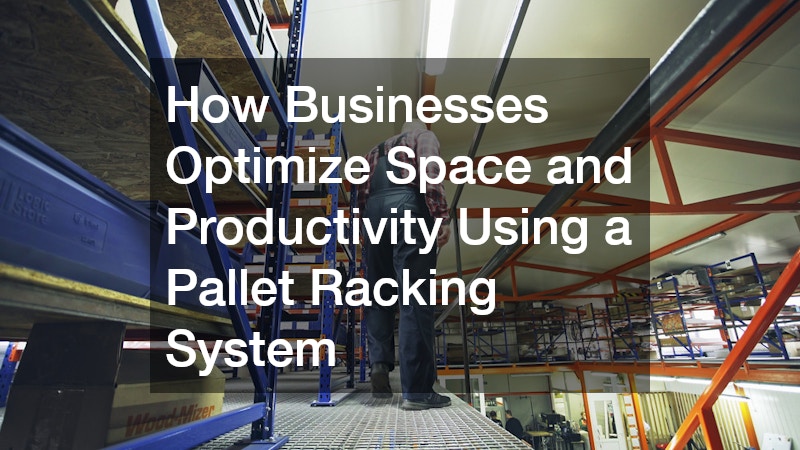
As businesses grow, one of the most common operational challenges they face is the efficient use of physical space. Warehouses, distribution centers, and storage facilities often struggle with congestion, disorganization, and limited accessibility as inventory levels increase. Without a structured approach to storage, productivity can decline, order fulfillment slows down, and operational costs rise. This makes space optimization a critical factor in maintaining smooth and scalable operations.
One of the most effective solutions for addressing these challenges is a pallet racking system. By organizing inventory vertically and systematically, businesses can significantly increase storage capacity without expanding their physical footprint.
This approach not only maximizes available space but also improves workflow efficiency, making it easier for employees to locate, access, and manage inventory. When implemented correctly, it becomes a foundational component of a well-structured warehouse strategy that supports long-term productivity and growth.
Maximizing Warehouse Layout Efficiency
Efficient warehouse design begins with understanding how space is currently being used and identifying areas of inefficiency. Many businesses unknowingly waste valuable square footage due to poor layout planning, inconsistent shelving, or unstructured storage methods. This can lead to delays in order processing and increased labor time spent searching for products.
A well-planned layout focuses on clear aisles, logical product placement, and optimized traffic flow. By creating designated zones for receiving, storage, picking, and shipping, businesses can reduce unnecessary movement and improve operational speed. Vertical storage also plays a major role in increasing usable space, allowing companies to store more inventory within the same footprint.
Proper planning ensures that every square foot serves a purpose. When storage systems are aligned with operational needs, employees can work more efficiently, and overall productivity improves. This structured approach reduces congestion and allows businesses to scale without requiring immediate facility expansion.
Improving Inventory Flow and Accessibility
Inventory management becomes increasingly complex as product volume grows. Without a clear system in place, items can become misplaced, difficult to locate, or improperly tracked. This leads to inefficiencies that impact both internal operations and customer satisfaction.
Implementing a pallet racking system helps address these issues by creating a structured and accessible storage environment. Products are stored in designated locations, making it easier for staff to locate and retrieve items quickly. This reduces downtime and improves order fulfillment speed, which is critical in fast-paced industries.
In addition to improving accessibility, organized storage also enhances inventory accuracy. When items are consistently placed in specific locations, tracking becomes more reliable, and the risk of errors decreases. This level of organization supports better decision-making and ensures that inventory data remains accurate and up to date.
Enhancing Productivity Through Organized Storage
Productivity in warehouse environments is closely tied to how efficiently employees can perform their tasks. Disorganized storage systems often lead to wasted time, unnecessary movement, and increased physical strain on workers. Over time, these inefficiencies can significantly impact overall performance.
A structured storage approach improves workflow by reducing the time spent searching for products and navigating cluttered spaces. When inventory is clearly organized and easily accessible, employees can complete tasks more quickly and with greater accuracy. This leads to smoother operations and higher output levels across the board.
Safety is another important factor influenced by organization. Cluttered environments increase the risk of accidents, including trips, falls, and product damage. A well-organized storage system helps maintain clear pathways and reduces hazards, creating a safer working environment for employees. This not only protects staff but also reduces potential operational disruptions caused by workplace incidents.
Reducing Operational Costs and Improving Efficiency
Operational costs are a major concern for businesses managing physical inventory. Inefficient storage systems often lead to increased labor costs, higher error rates, and unnecessary use of space. Over time, these issues can significantly impact profitability.
By optimizing storage layout and improving accessibility, businesses can reduce the time and effort required to manage inventory. This leads to lower labor costs and improved efficiency across warehouse operations. Employees spend less time navigating disorganized spaces and more time focusing on productive tasks.
Additionally, better organization reduces the likelihood of product damage and loss. When items are stored securely and systematically, the risk of mishandling decreases. This contributes to lower replacement costs and improved inventory control, both of which support stronger financial performance.
Efficient space management is a critical factor in maintaining productivity and supporting business growth. As operations expand, the ability to organize inventory effectively becomes increasingly important. Without a structured approach, warehouses can quickly become congested, disorganized, and difficult to manage, leading to inefficiencies that impact both cost and performance.
A pallet racking system provides a practical and scalable solution for addressing these challenges. By improving storage organization, enhancing accessibility, and maximizing available space, it allows businesses to operate more efficiently and adapt to changing demands. This level of structure not only improves day-to-day operations but also supports long-term strategic growth.
When businesses invest in better storage systems, they create a foundation for improved productivity, reduced operational costs, and greater scalability. Over time, this leads to more efficient workflows, safer working environments, and a stronger ability to meet customer demand. In a competitive market, these advantages can make a significant difference in overall success and sustainability.